
Planning a train journey can involve comparing ticket prices, checking departure times, reviewing different routes, and figuring out which booking option offers the best value. Trainline aims to make this process easier by bringing train and coach travel information together in one digital platform.
Whether you are commuting regularly, planning a weekend getaway, or travelling between cities, Trainline provides a convenient way to search for journeys and purchase tickets. Its platform is particularly relevant to travellers in the United Kingdom and across parts of Europe, where multiple operators may serve the same route.
But is Trainline worth using, and how does it compare with booking directly through a train operator? This Trainline review explores its features, ticket prices, booking experience, mobile app, customer support, and the main things to consider before making a reservation.
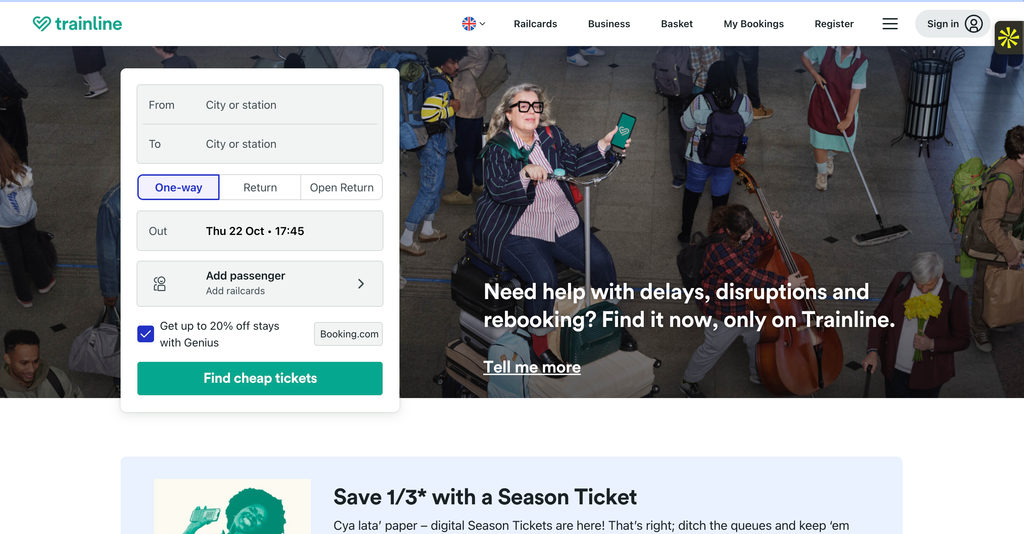
What Is Trainline?
Trainline is a travel booking platform that allows customers to search for train journeys, compare available travel options, and purchase tickets through its website or mobile application. It also provides access to selected coach journeys, depending on the route and market.
Rather than operating the trains itself, Trainline acts as an intermediary between travellers and transport operators. This means customers can use the platform to explore journeys offered by different providers without having to visit multiple booking websites individually.
The platform is especially useful when planning journeys involving different railway companies or comparing departure times across several services. Travellers can enter their origin, destination, and travel date to view available options and choose a journey that fits their schedule and budget.
Trainline’s availability and features vary by country and route. Before booking, it is worth checking the details shown for the specific journey you intend to take.
Key Features of Trainline
Trainline offers several tools designed to make planning and booking rail journeys more straightforward.
Train Ticket Search and Booking
One of Trainline’s main features is its journey search function. Users can enter their departure station, destination, travel date, and preferred time to see available services.
Search results typically provide useful details such as departure and arrival times, journey duration, transfers, and ticket options. This information helps travellers compare routes without researching every operator separately.
For someone planning an unfamiliar journey, having these details in one place can save time. It can also make it easier to identify services that offer a suitable balance between price, convenience, and total travel time.
However, search results should always be checked carefully. A cheaper ticket may have restrictions on the time of travel, permitted route, or changes after purchase.
Price Comparison
Ticket prices can vary according to demand, departure time, ticket type, and how far in advance a journey is booked. Trainline helps users compare available options, making it easier to identify fares that fit their budgets.
For flexible travellers, comparing nearby departure times can sometimes reveal cheaper alternatives. Travelling outside peak periods or booking earlier may also provide access to lower fares on certain routes.
The displayed price is not the only factor to consider, though. Check whether booking fees or other charges apply before completing your purchase. It is also sensible to compare the final price with the relevant train operator’s official website, as the same journey may be available directly.
Mobile App
Trainline offers a mobile application for travellers who prefer to organise journeys from their smartphones. The app can be used to search for services, book tickets, and access booking information while travelling.
Having ticket details readily available can be particularly useful when navigating busy stations or travelling through unfamiliar cities. Depending on the ticket and route, users may be able to access mobile tickets directly within the app.
Travellers should confirm whether their particular ticket is available digitally or requires another collection or validation method. Keeping a copy of booking information accessible is also a sensible precaution, especially when travelling with limited mobile connectivity.
Journey Information and Live Updates
Trainline provides journey information intended to help users plan their trips. Depending on the service and location, available information may include departure platforms, service changes, and travel updates.
This can be helpful when coordinating connections or making a time-sensitive journey. However, information may change as operators update their services, and the availability or speed of updates can vary.
For important journeys, check station displays and the train operator’s official announcements as well. If a delay or cancellation affects your trip, the operating company is often the most direct source of information about the service itself.
Coach Travel
Trainline also offers selected coach travel options. This can give users another way to compare journeys, particularly when a coach is cheaper than a train or when rail services are inconvenient.
Coach travel generally involves different journey times, boarding arrangements, luggage policies, and ticket conditions. Compare these details before choosing an option based only on price.
The availability of coach services depends on the destination and market, so not every journey will offer both train and coach alternatives.
How Easy Is Trainline to Use?
A booking platform should make it easy to find a suitable journey without requiring travellers to understand every detail of the transport network. Trainline’s search-based approach is designed to simplify that process.
The basic booking process is straightforward: enter the journey details, compare the available options, select a ticket, provide the required passenger information, and complete payment.
The comparison stage is particularly useful for routes served by multiple operators. Rather than opening several websites, travellers can begin with one search and narrow their choices according to departure time, journey duration, and fare.
However, ease of use still depends on the complexity of the journey. A simple direct trip is generally easier to understand than an itinerary involving multiple connections, different operators, or separate tickets.
Before paying, carefully review the complete itinerary. Check the departure and arrival stations, transfer times, route restrictions, and whether the booking covers the entire journey.
A low price is less useful if the ticket does not match your plans or if the connection leaves too little time to change trains comfortably.
Trainline Pricing: Are Tickets Cheaper?
Price is one of the biggest reasons travellers compare booking platforms. Trainline can make it easier to find and compare available fares, but using the platform does not guarantee that every ticket will be cheaper than booking directly.
Rail fares depend on several factors, including the route, operator, time of travel, ticket availability, and fare conditions. Advance tickets may be less expensive than flexible tickets, while peak-time journeys can cost more than off-peak alternatives.
Trainline displays available ticket options for supported journeys, allowing users to compare prices and select the fare that suits their plans.
Booking Fees and Additional Costs
When evaluating Trainline’s value, look at the final checkout price rather than relying exclusively on the fare shown in the search results.
Booking fees or other charges may apply depending on the transaction and market. Compare the complete cost with the relevant operator’s official website before deciding where to purchase.
This comparison is particularly worthwhile for expensive journeys or when booking several passengers at once. Even a small additional charge can affect the total cost of a family or group trip.
Is Booking in Advance Better?
Booking in advance can help travellers access lower-priced tickets on routes where advance fares are available. It is especially useful when travel dates and departure times are already confirmed.
However, the cheapest ticket may come with restrictions. Some advance fares are tied to a specific train, while flexible tickets may allow more freedom to travel at different times.
If your plans are uncertain, consider whether paying more for flexibility is worthwhile. A slightly more expensive ticket may offer better value if it reduces the risk of needing to purchase another ticket after a change of plans.
Trainline’s Ticket Types and Booking Conditions
Understanding ticket restrictions is essential when booking rail travel. Two tickets for the same journey can have significantly different prices because they offer different levels of flexibility.
Depending on the route and operator, travellers may encounter advance, off-peak, and flexible fare options. The precise names and conditions vary by country and railway company.
Advance tickets often offer lower prices but may be restricted to a particular service. Off-peak fares can provide more flexibility around travel times, subject to the applicable restrictions. Flexible tickets may allow travel on a broader range of services, although specific conditions still apply.
Trainline displays ticket options for supported journeys, but customers should read the conditions attached to the selected fare before paying.
Pay attention to whether the ticket permits changes, whether a refund is available, and whether a fee or fare difference applies. Do not assume that all tickets can be exchanged or refunded simply because they were purchased online.
If a journey includes multiple operators or connections, verify that the selected tickets cover the complete itinerary. Separate tickets can have different conditions, and missing a connection may create complications depending on the circumstances.
Trainline’s Refunds and Changes Policy
Travel plans can change unexpectedly, making refunds and ticket amendments important considerations.
Trainline’s refund and change arrangements depend on the ticket conditions, the operator, the route, and the reason for the request. Some tickets may be refundable or changeable, while others may have restrictions.
Before purchasing, review the policy associated with the exact fare. Check whether a refund requires cancellation before departure, whether an administration fee applies, and whether changing the journey involves paying a difference in fare.
It is also important to distinguish between voluntarily changing a trip and disruption caused by the railway operator. If a train is cancelled or significantly delayed, different passenger rights or compensation arrangements may apply depending on the country and circumstances.
Keep your booking confirmation and any relevant disruption notices. These records can be useful if you need to contact customer support or submit a claim.
For the most accurate information, consult Trainline’s current help pages and the relevant transport operator’s policy. Avoid assuming that a policy applying to one route or ticket type automatically applies to another.
Customer Support and Booking Assistance
Customer support matters when a booking needs to be changed, a ticket cannot be accessed, or a disruption affects travel plans.
Because Trainline acts as a booking intermediary, the appropriate contact point may depend on the issue. Questions about a booking, payment, or the platform’s refund process may need to be handled through Trainline, while operational questions about a particular train may be better directed to the operator.
Before contacting support, keep your booking reference, travel date, route, and relevant ticket details available. Providing this information can help make the conversation more efficient.
Travellers should also check the official help centre for instructions on managing bookings, accessing tickets, requesting refunds, or handling disruptions. The availability of support channels and response times can vary, so it is difficult to guarantee that every issue will be resolved within a particular timeframe.
For urgent travel problems, such as a cancelled service or a missed connection, consult station staff and official operator announcements rather than relying exclusively on an online booking platform.
Is Trainline Reliable for International Travel?
Trainline can be useful for international rail planning in supported European markets, particularly when a journey involves services from more than one operator.
Comparing journey options in one place can reduce the effort involved in researching cross-border routes. However, international journeys may involve additional considerations, including border requirements, station changes, seat reservations, and different ticket rules.
Not every operator, route, or ticket type is necessarily available through a single booking platform. If your itinerary involves several countries, check that the booking covers every leg of the journey and that you understand the rules for each service.
Allow sufficient time for transfers, particularly when changing stations or travelling with luggage. A connection that looks convenient on paper may be stressful if there is little room for delays.
For international travel, also verify the required travel documents and any applicable entry requirements through official government sources. A train booking does not replace the documentation needed to enter another country.
Trainline vs Booking Directly With Train Operators
One of the most useful comparisons to make is between Trainline and an operator’s official website.
Trainline’s main advantage is convenience. It brings supported journey options together, allowing travellers to compare services and fares without researching every operator individually. This can be especially helpful when a route has several possible combinations.
Booking directly can offer other advantages. The operator’s website is often the clearest source for service-specific information, disruption updates, and the conditions associated with its tickets. Depending on the route, direct booking may also offer a different final price or make certain customer service processes more straightforward.
Neither option is automatically better for every trip.
A practical strategy is to use Trainline to compare routes and departure times, then check the most suitable option directly with the operator. Compare the total cost, ticket restrictions, and booking conditions before making a final decision.
If the prices and terms are comparable, convenience may be the deciding factor. If there is a meaningful difference in price or flexibility, consider which option offers the better overall value rather than choosing solely by habit.
Who Should Use Trainline?
Trainline may be particularly useful for several types of travellers.
Regular rail travellers: People who frequently travel between cities can use the platform to compare available services and manage bookings in one place.
Tourists exploring Europe: Travellers unfamiliar with local railway operators may appreciate having a central starting point for researching supported routes.
Budget-conscious passengers: Those with flexible schedules can compare departure times and fare options to look for lower-priced journeys.
Travellers who prefer mobile booking: People who like having tickets and booking details on their phones may find the app convenient, subject to the ticket format available for their trip.
People planning multi-operator journeys: Comparing supported services in one place can make it easier to understand the available options.
On the other hand, travellers who prioritise direct communication with a railway operator, need highly specialised ticket arrangements, or are booking a route not supported by Trainline may prefer to book directly.
Tips for Getting the Most Out of Trainline
A few practical habits can make the booking process smoother.
First, compare different departure times if your schedule allows. A small adjustment to your travel time may reveal a more affordable fare.
Second, check the complete itinerary before paying. Confirm stations, transfer times, journey duration, and any restrictions associated with the ticket.
Third, compare the final price with the operator’s website. This helps you understand whether Trainline offers a meaningful advantage for your particular journey.
Fourth, review the change and refund conditions. If there is a possibility that your plans may change, choose a fare with flexibility that matches your needs.
Finally, keep your booking confirmation accessible and check official service updates before leaving for the station. This is particularly important for early departures, tight connections, and journeys affected by planned engineering work.
Is Trainline Worth It?
Trainline is worth considering if you want a convenient way to search for supported train journeys, compare fares, and manage bookings online. Its centralised search experience can be particularly useful when multiple operators serve a route or when you are planning rail travel in an unfamiliar area.
Its biggest advantage is convenience rather than a guarantee of the lowest price. The ability to compare services can help travellers make informed decisions, but ticket prices, booking charges, and restrictions still need to be checked carefully.
The platform is most useful when customers understand their travel requirements and take a moment to compare the available options. For simple journeys, booking through Trainline can be straightforward. For complex itineraries, international connections, or tickets with strict conditions, additional research is worthwhile.
Final Verdict
Trainline offers a practical option for booking train journeys and selected coach services, especially for travellers who value comparing routes and fares through one platform. Its website and app provide a convenient starting point for planning trips, reviewing departure options, and accessing booking information.
The main strengths are its centralised search experience, fare comparison tools, and mobile booking convenience. The most important considerations are potential booking charges, ticket restrictions, refund conditions, and the fact that prices or availability may differ from those offered directly by an operator.
Overall, Trainline is worth using as a journey comparison and booking tool, provided you check the final fare and ticket conditions before paying. For the best results, compare the options on Trainline with the relevant operator’s official website, confirm the details of your itinerary, and choose the ticket that offers the right balance of price and flexibility for your trip.